How Datsunworks built a twin-cam future for the L-series

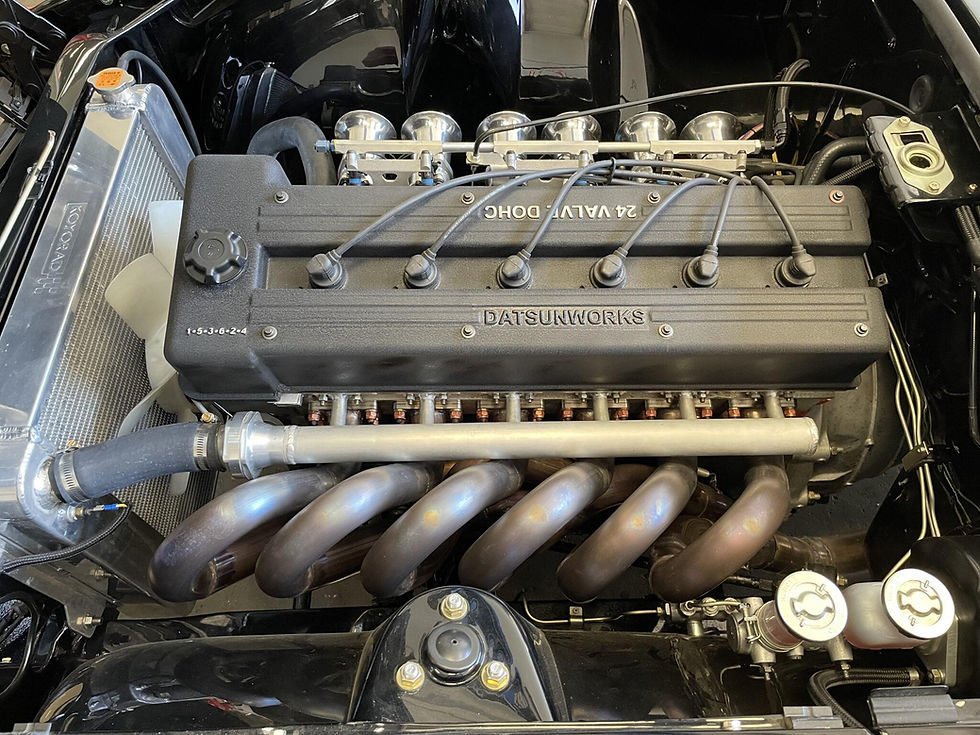
An engine swap can change an early Z’s entire personality. Derek Minetti’s Datsunworks KN20 asks a more unusual question: how far can the original L-series idea be developed?
The answer is a purpose-built, dual-overhead-cam cylinder head for Nissan’s inline-six. It brings Honda-derived valvetrain hardware into a custom casting while retaining the L-series foundation beneath it.
The project is a particularly satisfying example of what happens when someone with foundry experience takes a garage obsession seriously.
A twin-cam Z has historical precedent
Nissan already explored a different twin-cam route with the Fairlady Z432. Its S20 engine used four valves per cylinder, three carburetors and two camshafts—the combination behind the 432 name.
The KN20 follows its own path. It develops the L-series rather than reproducing the S20 or converting an ordinary 240Z into a factory Z432.
For an owner attached to the classic Nissan six, that distinction is central to the appeal. The project changes what happens above the block without abandoning the engine family that made them interested in the first place.

Modern foundry work made the idea practical
In his September 2014 introduction, Minetti described his background as an independent foundry-pattern maker, with CNC equipment and a 3D scanner at his disposal.
The turning point was access to 3D-printed sand molds. Traditional pattern-making constraints had made a twin-cam head an intimidating undertaking; printing the foundry molds opened up a different way to produce the casting.
The manufacturing process is part of the engineering story. It made the internal shapes and revisions of a small-run cylinder head more approachable for a specialist working outside a major manufacturer.
Datsunworks’ published component list identifies Honda K20-compatible valvetrain parts and modified Honda rocker shafts among the hardware used. The six-cylinder head itself remains a custom casting, with its own machining and assembly requirements.
Making the timing drive fit
A successful cylinder head also needs a workable way to drive its camshafts.
In a June 2021 development account, Minetti explained how packaging the KA24-based timing arrangement led to repeated revisions. Moving the idler and designing a compact tensioner helped create room for the guide layout he wanted.
That is the kind of work easily hidden by a finished engine photograph: clearance, geometry, service access and the relationship between components that were never originally designed to live together.
There was running experience behind the development, too. In a separate June 2021 update, Minetti reported more than 7,500 miles on his own head and more than 10,000 on another customer installation. Those are historical builder-reported mileages, not a current production count or an independent durability test.
A complete engine shows the potential
Z Car Garage’s July 2021 account documented a KN20 installation in Gary’s 240Z, nicknamed the Behemoth.
That combination used a Rebello 3.1-liter engine, KN20 head SN10, Jenvey individual throttle bodies, Haltech management and a custom RacecraftNW header. The shop reported 350 horsepower and 248 lb-ft of torque at the wheels on 91-octane fuel.
Those figures describe a developed engine combination. They are not a guaranteed gain from fitting the head to any L-series bottom end.
The distinction matters because the KN20 is best understood as an engine-building project. The cylinder head enables the combination; it does not replace the work required to develop it.
Choose the engine builder before the parts list
Datsunworks’ FAQ, revised June 2022, makes that boundary clear: the casting requires a competent engine builder to complete it.
Its documentation identifies work such as port finishing, valve-seat and guide installation, cam-lobe grinding, assembly, and checking cam timing and piston-to-valve clearance. It also leaves exhaust headers to the requirements of each build.
The attraction is the freedom to develop a coherent engine around a particular goal. The tradeoff is the machining, measurement and coordination that goal requires.
For the right project, that is precisely the point. The KN20 gives the old L-series another engineering chapter—and makes the process of getting there almost as interesting as the finished car.
Sources
Datsunworks project introduction, September 19, 2014; component and completion list, undated; timing-drive development, June 6, 2021, reproduced on the blog index; running update, June 5, 2021; FAQ, revised June 24, 2022; Z Car Garage’s KN20 build report, July 30, 2021; Nissan’s Z432 heritage record, undated.


Comments